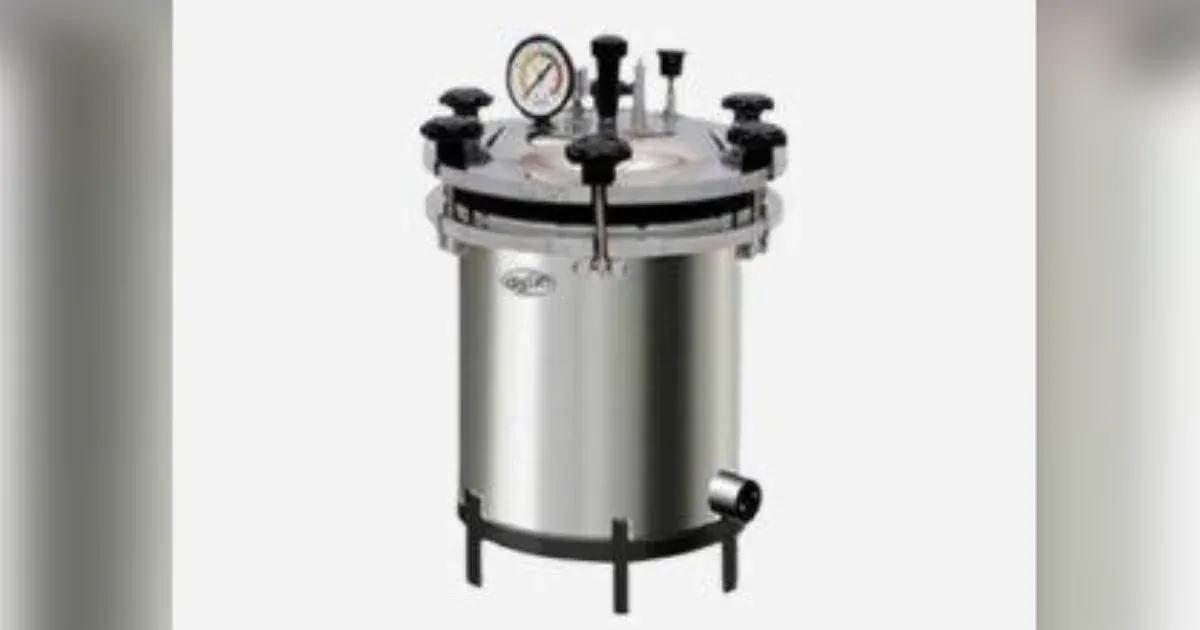
A portable autoclave is a compact steam sterilization machine used to sterilize suitable medical and laboratory instruments using high-temperature steam under pressure. Portable autoclaves are useful for clinics, dental practices, laboratories, small healthcare facilities, and other settings where reliable instrument sterilization is required. This guide explains how portable autoclaves work, their features, uses, safety considerations, and what to check when buying an autoclave in Nepal.
A portable autoclave is a steam sterilization device designed to sterilize appropriate instruments and other compatible materials using heat, steam, and pressure. Unlike ordinary boiling, an autoclave uses pressurized steam to achieve sterilization conditions that can destroy microorganisms, including bacteria, viruses, fungi, and resistant spores when the appropriate cycle is correctly completed. WHO describes portable steam sterilisers as equipment that can be used for general healthcare and primary-care activities, with portable models available in relatively compact capacities.
Portable and tabletop autoclaves are available in different designs, capacities, and levels of automation. Depending on the model, features can include temperature and pressure controls, preset sterilization programs, pressure gauges, safety valves, automatic shut-off, timers, drying functions, digital displays, cycle indicators, and other monitoring systems. More advanced tabletop autoclaves can provide programmed cycles for different loads, while some models include testing functions and cycle-data recording. For example, modern tabletop systems can provide dedicated cycles at 121°C and 134°C for different load types.
When choosing a portable autoclave in Nepal, the correct machine should be selected according to the type and volume of materials that need to be sterilized. Important considerations include chamber capacity, sterilization temperature and time, pressure control, compatible load types, heating method, safety mechanisms, ease of operation, power requirements, maintenance, spare parts, and technical support. A small portable unit may be suitable for limited instrument loads, while clinics or facilities with higher workloads may require a larger tabletop or automated autoclave.
What Is a Portable Autoclave?
A portable autoclave is a compact steam sterilizer designed to make sterilization possible in healthcare, laboratory, dental, educational, and other appropriate environments where instruments need to be processed between uses.
The basic principle is straightforward: water is heated to produce steam, the steam is contained within a pressure vessel, and the resulting temperature and pressure are maintained for the required sterilization cycle. WHO notes that in steam sterilization, it is the steam and its ability to transfer heat—not simply the water itself—that provides the sterilizing effect.
How Does a Portable Autoclave Work?
A portable autoclave uses controlled steam and pressure to expose the load to the required sterilization conditions. Once the chamber is loaded correctly, the device heats water and generates steam. As pressure increases inside the chamber, the temperature also rises, allowing the instruments to be exposed to a controlled high-temperature steam environment.
The exact temperature, holding time, pressure, and drying process depend on the autoclave design and the load being processed. Many medical tabletop autoclaves provide sterilization programs around 121°C and 134°C, although the correct cycle must always be selected according to the manufacturer's instructions and the type of load.
Key Features of a Portable Autoclave
One of the most important features is controlled temperature and pressure. Maintaining the required sterilization conditions throughout the cycle is essential for effective processing. Depending on the model, this may be managed through mechanical controls, pressure gauges, thermostats, or electronic monitoring systems.
Portable autoclaves may also include preset timers or sterilization programs. More advanced tabletop machines can provide separate programs for unwrapped and wrapped instruments or different material types. Some modern systems also provide dedicated test cycles, such as Bowie-Dick or leak testing, depending on their design.
Safety features are another important consideration. Depending on the model, these may include pressure-release mechanisms, safety valves, overheating protection, automatic shut-off, door-locking systems, and other safeguards. Some modern autoclaves prevent the door from opening while the chamber remains pressurized.
Common Uses of Portable Autoclaves
Portable autoclaves are commonly used for sterilizing suitable reusable medical instruments in clinics, dental practices, laboratories, small healthcare facilities, educational institutions, and other professional environments.
They can be particularly useful where a compact sterilization system is required and the volume of instruments does not justify a large central sterilization system. WHO identifies portable steam sterilisers as suitable for certain primary-healthcare applications and general instrument sterilization, subject to the limitations of the sterilizer design.
The materials that can be processed depend on the specific autoclave and its validated cycles. Not every item can safely or effectively be sterilized in every portable autoclave, so the manufacturer's instructions should always be followed.
Portable Autoclave for Clinics and Dental Practices
Small clinics and dental facilities may require frequent sterilization of reusable instruments. A compact autoclave can provide an on-site sterilization solution without requiring the space associated with a large hospital sterilization system.
For these environments, factors such as chamber capacity, cycle duration, instrument compatibility, ease of loading, drying performance, water requirements, and daily workload should be considered. Modern tabletop autoclaves are specifically designed for clinical environments where compact equipment and repeatable sterilization cycles are required.
Important Specifications to Check
When purchasing a portable autoclave in Nepal, start by checking the chamber capacity. Capacity should match the amount of instruments processed during a typical cycle. A machine that is too small may require unnecessary repeat cycles, while an oversized machine may occupy more space and require more resources than necessary.
The sterilization temperature and cycle time should also be checked. Common medical autoclaves use cycles around 121°C or 134°C, but the actual cycle depends on the load and equipment design. For example, some tabletop autoclaves specify 121°C cycles for certain delicate loads and 134°C cycles for other instrument loads.
Other specifications to consider include operating pressure, heating power, water requirements, drying capability, control system, display or pressure gauge, chamber material, tray configuration, safety mechanisms, electrical requirements, and available sterilization programs.
Manual vs Automatic Portable Autoclave
Portable autoclaves can range from relatively simple pressure-based units to electronically controlled automatic machines. Manual or basic pressure-type units may require greater operator involvement in monitoring temperature, pressure, and cycle duration.
Automatic or digitally controlled models can simplify operation by providing preset programs, automated pressure or temperature control, cycle indicators, alarms, and sometimes drying and data-recording functions. The appropriate choice depends on the facility's workload, staff requirements, budget, and sterilization needs.
Safety Considerations
An autoclave operates using high temperature and pressure, so proper handling is essential. Operators should receive appropriate training and follow the manufacturer's operating instructions. The chamber should never be opened while it remains pressurized, and the correct loading procedure should be followed for every cycle.
The autoclave should also be inspected regularly for issues such as damaged seals, faulty valves, unusual pressure behavior, or other operating problems. WHO specifically notes that if a portable sterilizer fails to reach the required pressure because of issues such as a leaking seal or valve, the contents may not be sterilized.
Maintenance of a Portable Autoclave
Regular maintenance helps keep an autoclave operating reliably. The chamber and trays should be cleaned according to the manufacturer's instructions, while seals, valves, water systems, and other relevant components should be inspected at appropriate intervals.
Water quality and proper water levels are also important for many autoclave designs. Depending on the equipment, users may need to drain and clean the reservoir, remove deposits, inspect the gasket, and perform recommended tests. Advanced autoclaves may provide leak tests or other validation-related functions as part of their maintenance and monitoring procedures.
How to Choose the Right Portable Autoclave in Nepal
The first step is to determine what you need to sterilize and how much you need to sterilize per day. A small clinic with a limited number of reusable instruments may need a compact unit, while a busy dental or medical facility may benefit from a larger tabletop machine with faster or multiple programmed cycles.
Next, evaluate chamber size, temperature and pressure range, cycle options, drying function, safety features, ease of operation, power consumption, and maintenance requirements. It is also worth checking whether replacement gaskets, trays, valves, and other consumables or spare parts are readily available in Nepal.
Finally, consider after-sales service and technical support. An autoclave is an important piece of sterilization equipment, so access to servicing and replacement parts can be as important as the initial purchase price.
Portable Autoclave in Nepal
A portable autoclave in Nepal can be useful for clinics, dental practices, laboratories, small healthcare facilities, training institutions, and other professional environments that require steam sterilization in a compact format. The right equipment depends on the type of instruments, required capacity, workload, available space, and sterilization processes of the facility.
For buyers in Kathmandu and throughout Nepal, selecting an autoclave from a reliable medical-equipment supplier and ensuring appropriate installation, operator training, maintenance, and technical support can help support consistent equipment performance.
Conclusion
A portable autoclave provides a compact solution for steam sterilization where suitable reusable instruments and materials need to be processed. By using controlled heat, steam, and pressure, autoclaves can achieve effective sterilization when the correct cycle, loading method, equipment, and operating procedures are used. Portable models are particularly useful for facilities that need sterilization capability without a large central sterilization system.
When buying a portable autoclave in Nepal, consider chamber capacity, sterilization temperature, pressure control, cycle time, compatible load types, safety mechanisms, drying capability, power requirements, maintenance, spare parts, warranty, and technical support. Choosing equipment based on the actual workload and sterilization requirements of the facility is essential for appropriate and reliable use.